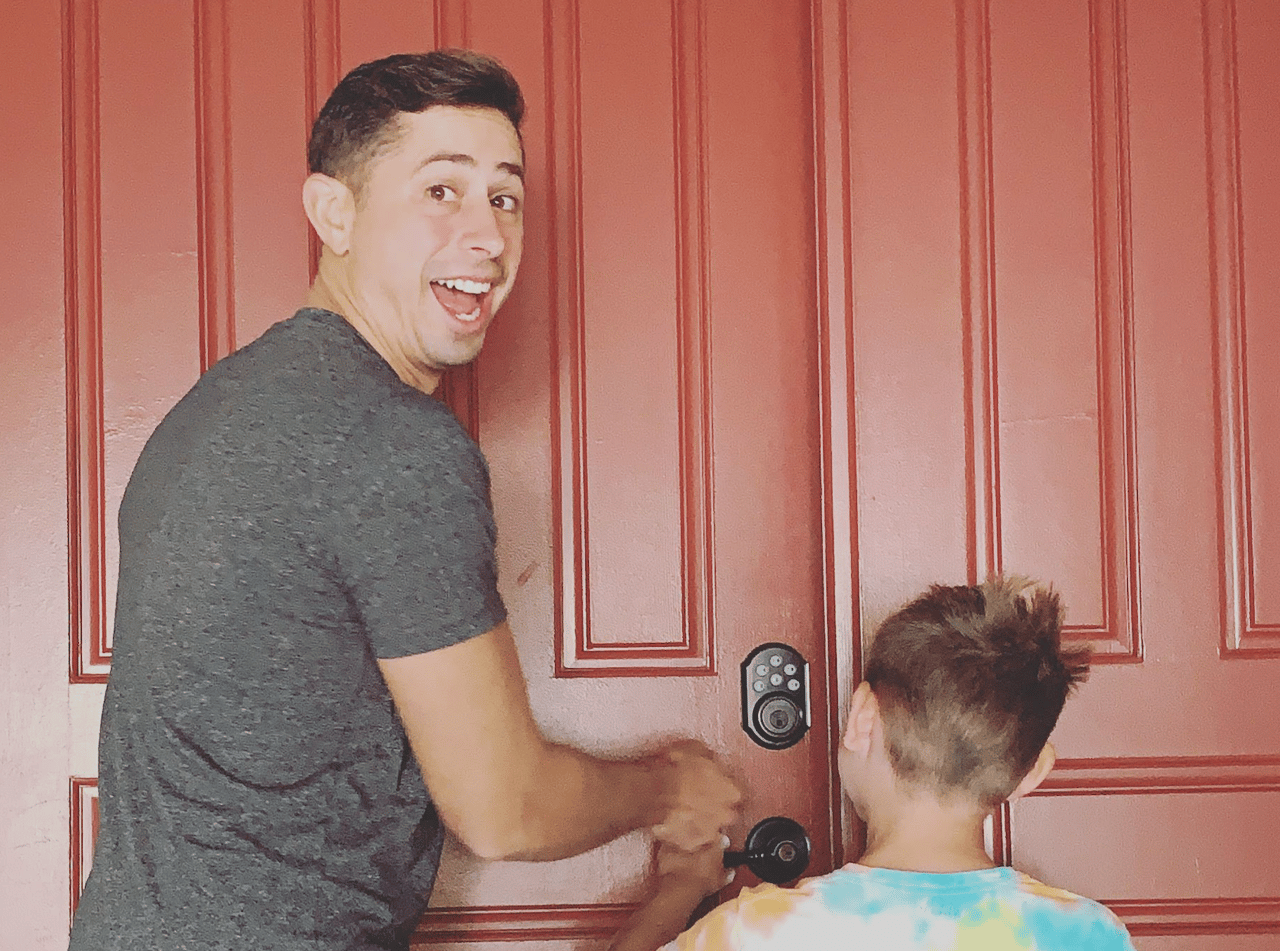
If you're moving up in the East Bay, you've probably hit the same wall most of my clients do. Your down payment is sitting inside the house you live in. You can't get to it until you sell, and the home you want won't wait that long.
A bridge loan is one way out of that trap. Used right, it lets you buy first, move once, and sell on your own schedule. Used wrong, it leaves you carrying two homes with no clean way out.
What a Bridge Loan Does
A bridge loan is short-term financing against the equity in your current home. You use it for the down payment on your next home, then pay it off when your current home sells.
The point isn't the loan. The point is that it lets you write an offer that doesn't depend on selling first.
How It Worked for One Oakland Family
Ten years ago, my clients bought their starter home in Oakland for $500,000 with 10% down. Then they had a baby, another was on the way, and they were running out of space.
We found a large home in Lincoln Heights that was significantly undervalued, and we pounced. They had about $400,000 in equity and a pre-approval well above the asking price.
The bridge loan covered their down payment, with enough left over to paint and stage their Oakland home before listing it. Here's how the timeline played out:
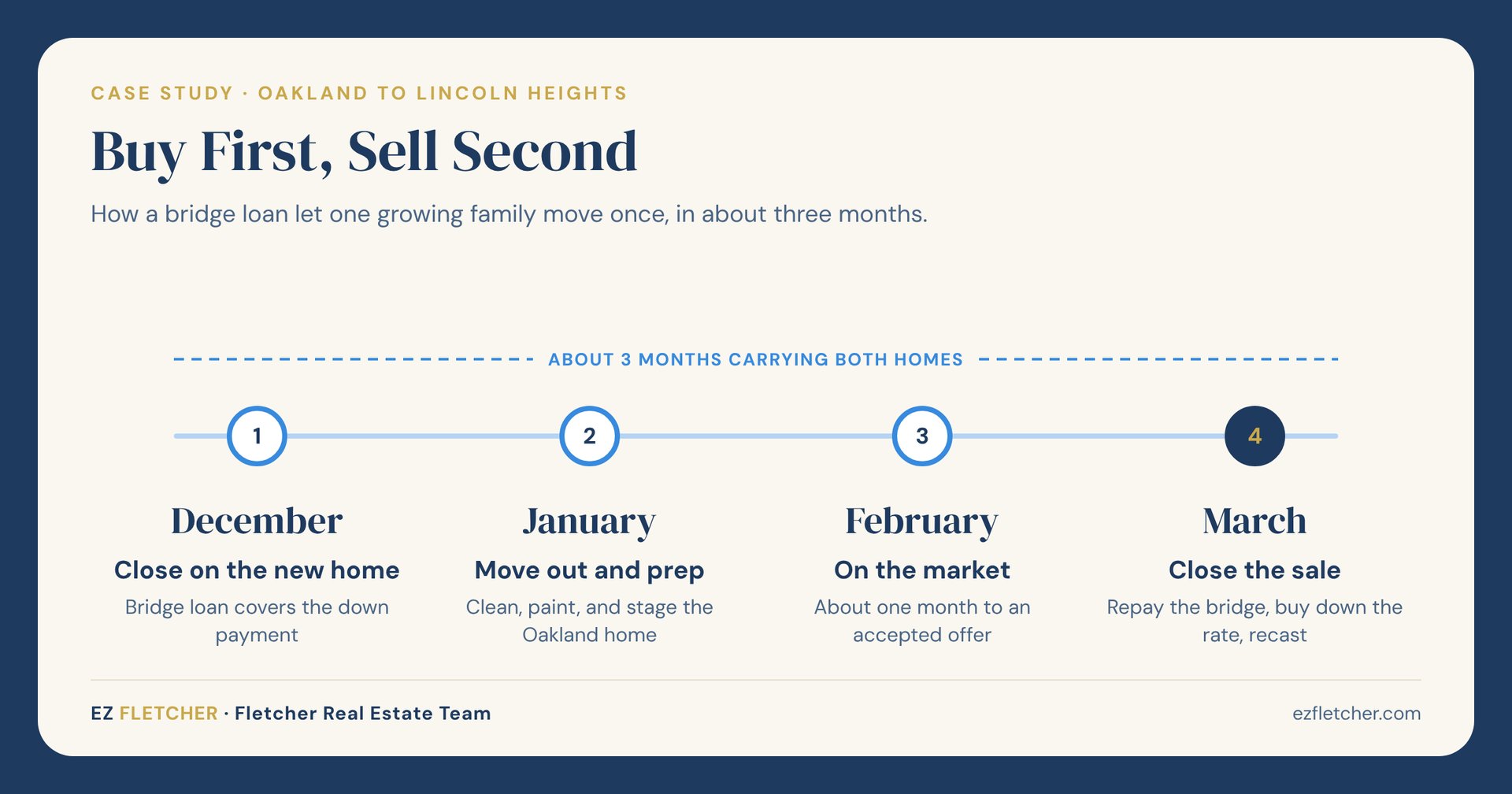
When the sale closed, they paid off the bridge loan, bought down their interest rate, and still had money left over to recast their new loan, which lowered their monthly payment. It all worked out great.
When a Bridge Loan Makes Sense
The best use case is moving from a slower market into a hot one. If the home you're selling is in a slower area, a seller in a competitive neighborhood won't trust your sale contingency. A bridge loan takes that worry off the table.
It also works when you're moving from one hot market to another. Your current home should sell quickly, so the risk of carrying two homes is low, and the bridge loan takes the sale contingency off your offer.
It also makes sense when you want to move out and prep your home before listing. A vacant, painted, staged home shows better than one you're still living in.
When to Avoid One
I haven't had a bridge loan go sideways, because my clients carefully weigh their options before they commit. But here's how it goes wrong: you can't repay the bridge, or your home doesn't sell in a reasonable amount of time.
Your margin of error needs to be wide enough to absorb a slow sale. My Lincoln Heights clients had plenty of equity and a pre-approval well above the price they paid. That cushion is what made it safe. If the numbers only work when everything goes perfectly, it's not the right tool.
There's No Golden Rule
I get asked how much equity you need, or how long you should be able to carry two payments. There's no single answer, because every move has two micro-markets: the one you're leaving and the one you're moving into.
When we sit down, we look at five things:
- How much equity you have
- How expensive the replacement home is
- How far away it is
- Whether the market you're buying in is hot or cold
- Whether the market you're selling in is hot or cold
Everything is on the table at the start: a bridge loan, a HELOC, a contingent offer, or selling first. Once we know your market value and what homes sell for where you want to go, your margin is clear, and so is whether a bridge loan fits.
Contingent Offer or Bridge Loan?
You never need a non-contingent offer. But know what a contingency costs you.
If the home you're selling is in a hot market, think Berkeley, Albany, El Cerrito, or parts of Oakland, a seller can trust that it will sell, and a contingent offer can still win. If you're coming from a slower market, expect to offer well above the next highest bidder to get into contract. That's where a bridge loan earns its keep.
What East Bay Lenders Are Offering
Work with a local lender, and let them walk you through their own terms. Product details change often, so treat this as a starting point. Published terms as of November 2026:
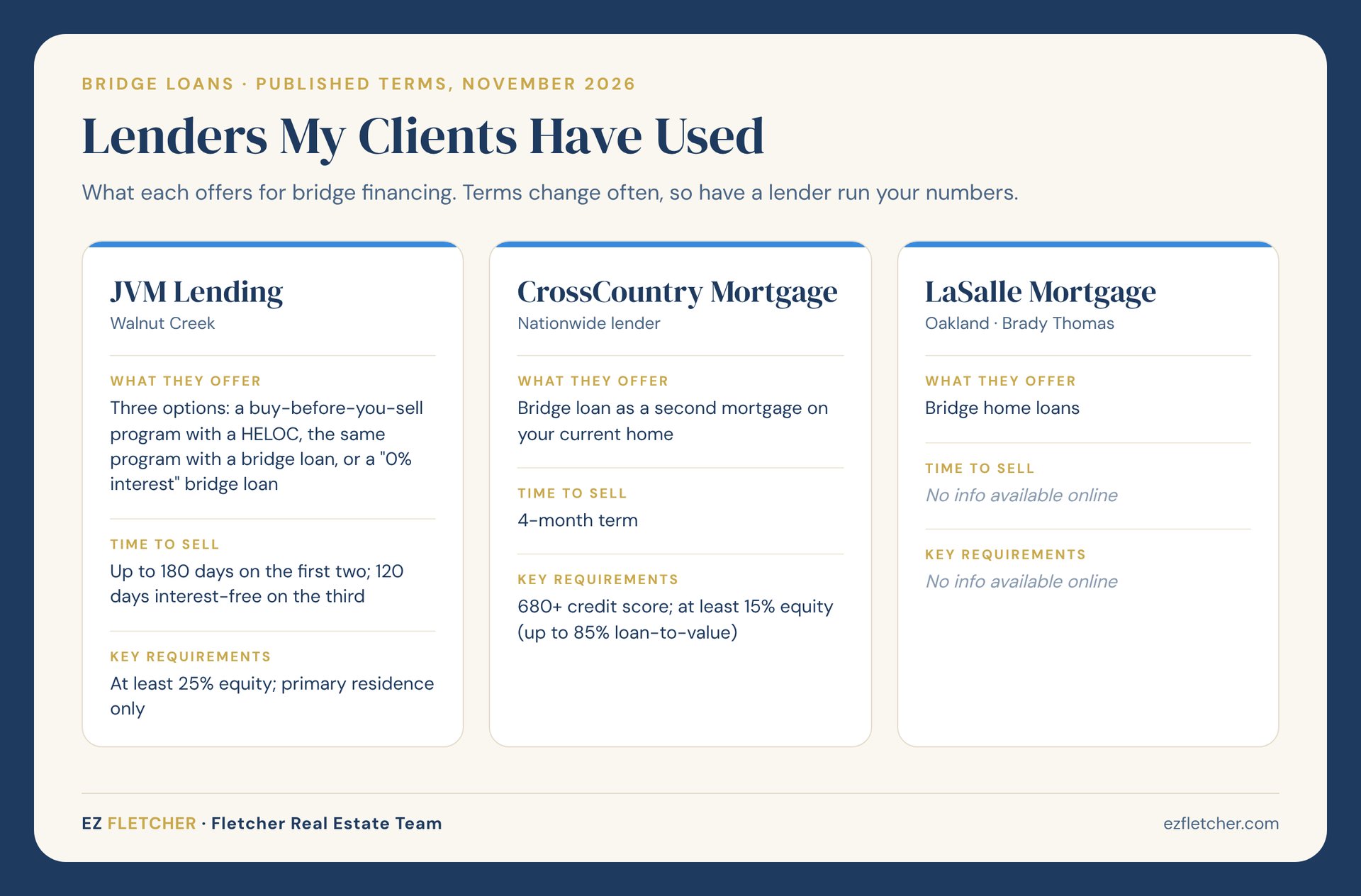
One thing to compare across every lender: what the fee is based on. JVM points out that the 0% bridge charges its fee on your home's full sale price, not the amount you borrow, so it can cost more than a loan with an interest rate. Ask every lender how their fee is calculated.
The Takeaway
It doesn't hurt to have a lender run your numbers. It's better to know something isn't a fit than to assume.
If you're thinking about moving up anywhere in the East Bay, let's look at your home's value and the areas you're considering. Then we'll know whether a bridge loan belongs in your plan.
Sources
- JVM Lending, Bridge Loans: https://www.jvmlending.com/loan-types/bridge-loan/
- CrossCountry Mortgage, Bridge Loan: https://crosscountrymortgage.com/mortgage/loans/programs/bridge-loan/
- LaSalle Mortgage, Bridge Home Loan: https://lasallemortgage.com/loan-options/bridge-home-loan/